
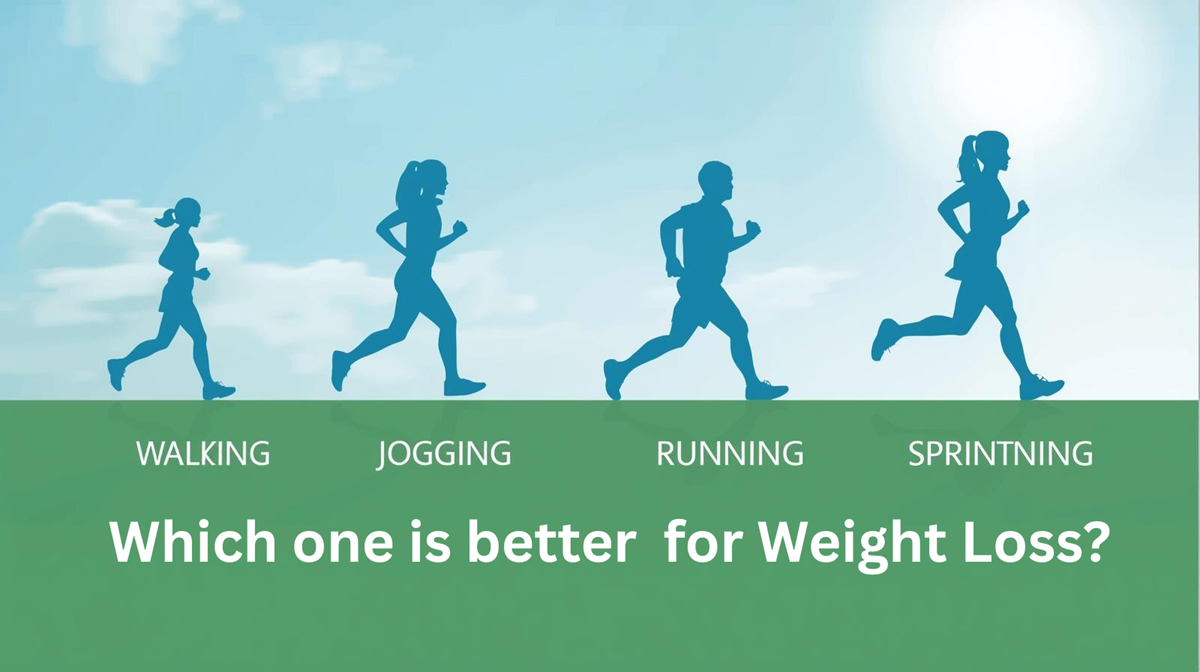
A visit to the hospital for a kidney stone became a wake-up call. Although the stone was minor and would pass naturally with proper hydration, the ultrasound revealed something more concerning. Weight had crept up 15 kg beyond the standard BMI range, and the liver showed signs of fatty deposits. Consequently, the doctor’s warnings about health risks associated with excess weight sparked a journey to find the best exercise for shedding pounds.
Initially, walking seemed like the simplest solution. However, after weeks of daily walks, the scale barely budged. This raised important questions: How much walking was needed? When should it be done? Moreover, how long would it take to see results?
A friend suggested that walking and jogging work well for maintaining health, while running and sprinting deliver faster weight loss results. Therefore, deeper research into each walking, jogging, running, or sprinting became necessary to understand which one of the exercise methods is better?
Walking for Weight Loss

Walking offers a simple yet powerful way to improve health. Within just 5 minutes, the heart rate increases, muscles warm up, and mood begins to lift. After 15 minutes, the body burns more calories and energy levels rise. Furthermore, by 30 minutes, the heart and lungs work harder while muscles strengthen and fat becomes the primary fuel source.
Benefits of Extended Walking
Continuing for a full hour burns even more calories while improving metabolism and increasing joint flexibility. Additionally, reaching the 10,000-step milestone supports weight loss, strengthens the heart, and enhances overall health. More steps mean greater benefits without stressing knees or joints. Even a few thousand steps daily can boost focus and reduce stress.
Research published on PubMed demonstrates that walking 10,000 steps per day improves body composition and metabolism in individuals with obesity.
Walking provides long-term benefits and supports general wellbeing as part of a healthy lifestyle.
Tips to Maximize Walking for Fat Loss
- Walk Briskly: Increasing pace elevates heart rate, which helps burn more calories.
- Use Hills or Stairs: Uphill walking or stair climbing makes muscles work harder and burns extra fat.
- Walk Longer: Aim for at least 30 minutes daily, with a goal of 10,000 steps when possible.
- Mix Between Fast & Slow: Alternating between fast and slow walking keeps the body challenged and boosts fat loss.
- Stay Consistent: Small daily walks add up significantly over time.
Jogging vs Running: What is the Difference?

Understanding the distinction between jogging and running helps choose the right approach. Jogging is slower and easier on the body, making it ideal for beginners or anyone wanting to avoid joint stress. In contrast, running is faster and more intense, burning more calories in less time but placing greater demands on knees and joints.
Comparing Jogging and Running
Jogging maintains a steady, comfortable pace, whereas running involves faster, more intense activity. Both methods positively impact health and fitness levels. Moreover, a PubMed study shows that running produces greater weight loss than walking during long-term follow-up.
- Jogging at 5 mph burns roughly 400–500 calories per hour
- Running at 6–7 mph can burn 600–800 calories per hour
Tips for Beginners
- Start with a walk-jog combination to build stamina gradually.
- Focus on proper form to avoid knee or ankle injuries.
- Gradually increase pace and distance over time as fitness improves.
Sprinting: High-Intensity Fat Burner

Sprinting involves running as fast as possible for a short distance. Although challenging, it ranks among the fastest ways to burn calories and lose fat. Despite lasting only seconds or minutes, sprinting triggers an afterburn effect where the body continues burning calories afterward. Additionally, sprinting strengthens the heart, boosts metabolism, and builds muscle in the legs and core.
Research on Sprinting Effectiveness
A meta-analysis on PubMed reveals that high-intensity interval training, which includes sprinting, significantly reduces total, abdominal, and visceral fat.
Beginner Sprinting Tips
- Start Short: Sprint for 20–30 seconds at a time, then walk or rest for 1–2 minutes.
- Warm Up First: Always do light jogging or stretching before sprinting to prevent injuries.
- Use Proper Form: Keep the back straight, arms pumping, and land softly on the feet.
- Gradually Increase: Add more sprints or slightly longer distances as stamina improves.
- Listen to the Body: If pain occurs in knees or muscles, slow down or take a break.
Walking vs Jogging vs Running vs Sprinting: Which is Best?

Choosing the right exercise depends on current fitness level and goals:
- Beginners: Walking is perfect—gentle, easy to start, and safe for joints.
- Intermediate: Jogging provides a good balance of calorie burn and endurance without excessive difficulty.
- Advanced: Running burns more calories and builds stamina, ideal for those with an established fitness base.
- Experienced/High-Intensity: Sprinting delivers maximum fat burn and fast results, but only when the body is ready for short bursts of intense effort.
Comparison Overview
| Exercise | Calories Burned | Intensity | Beginner-Friendly | Sustainability | Best For |
|---|---|---|---|---|---|
| Walking | 200–300/hr | Low | ✅ Yes | High | Beginners, joint issues |
| Jogging | 400–500/hr | Medium | ✅ Yes | Medium | Moderate fitness, fat loss |
| Running | 600–800/hr | High | ⚠ Caution | Medium | Faster fat loss, endurance |
| Sprinting | 500–900/hr | Very High | ⚠ Caution | Low | Experienced, short-time fat burn |
Combining Exercises for Maximum Fat Loss

Many fitness experts recommend mixing different types of cardio for optimal results. This approach keeps the body challenged and prevents adaptation.
Effective Combination Strategies
- Interval Training: Alternate walking and jogging or sprinting for 20–30 minutes to maximize calorie burn.
- Progressive Plan: Start with walking for 2–3 weeks, add jogging for another 2 weeks, then slowly introduce running or sprinting.
Weekly Routine Example
- Monday: Brisk walk (45 minutes)
- Wednesday: Jog (30 minutes)
- Friday: Sprint intervals (20 minutes)
- Saturday: Long walk or active recovery
This combination keeps the body challenged, improves endurance, and maximizes calorie burn throughout the week.
For those interested in exploring additional weight loss strategies, check out New Weight Loss Trends: GLP-1, Fasting & Zone 2 Cardio to discover cutting-edge approaches.
Safety Tips for Beginners

Starting any new exercise program requires attention to safety to prevent injuries and ensure long-term success:
- Always warm up and cool down to prevent injuries and improve flexibility.
- Start slow and listen to body signals to avoid overexertion.
- Stay hydrated and wear proper shoes designed for the specific activity.
- Gradually increase intensity rather than jumping straight into running or sprinting.
Final Thoughts
Choosing between walking, jogging, running, and sprinting is not necessary. Each exercise offers unique benefits. Therefore, what matters most is finding an activity that feels enjoyable and can be maintained consistently.
Walking is simple, gentle, and beginner-friendly while helping build stamina. Meanwhile, running burns more calories, and sprinting provides a powerful fat-burning boost effect.
Start where comfort allows, then mix things up as stamina increases. Remember, consistency matters more than intensity or speed. So keep moving and enjoy the journey toward a healthier lifestyle.
Medical Disclaimer
Important: The information provided in this article is for educational and informational purposes only and is not intended as medical advice. It should not be used as a substitute for professional medical consultation, diagnosis, or treatment.
Before starting any new exercise program, especially if there are pre-existing health conditions, joint problems, cardiovascular issues, or concerns about physical activity, consult with a qualified healthcare provider or physician. Individual fitness levels, health conditions, and medical histories vary significantly, and what works for one person may not be appropriate for another.
The content in this article does not establish a doctor-patient relationship. Always seek the guidance of a qualified health professional with any questions regarding medical conditions or exercise programs. Never disregard professional medical advice or delay seeking it because of information found in this article.
If experiencing pain, dizziness, shortness of breath, or any unusual symptoms during exercise, stop immediately and seek medical attention.