
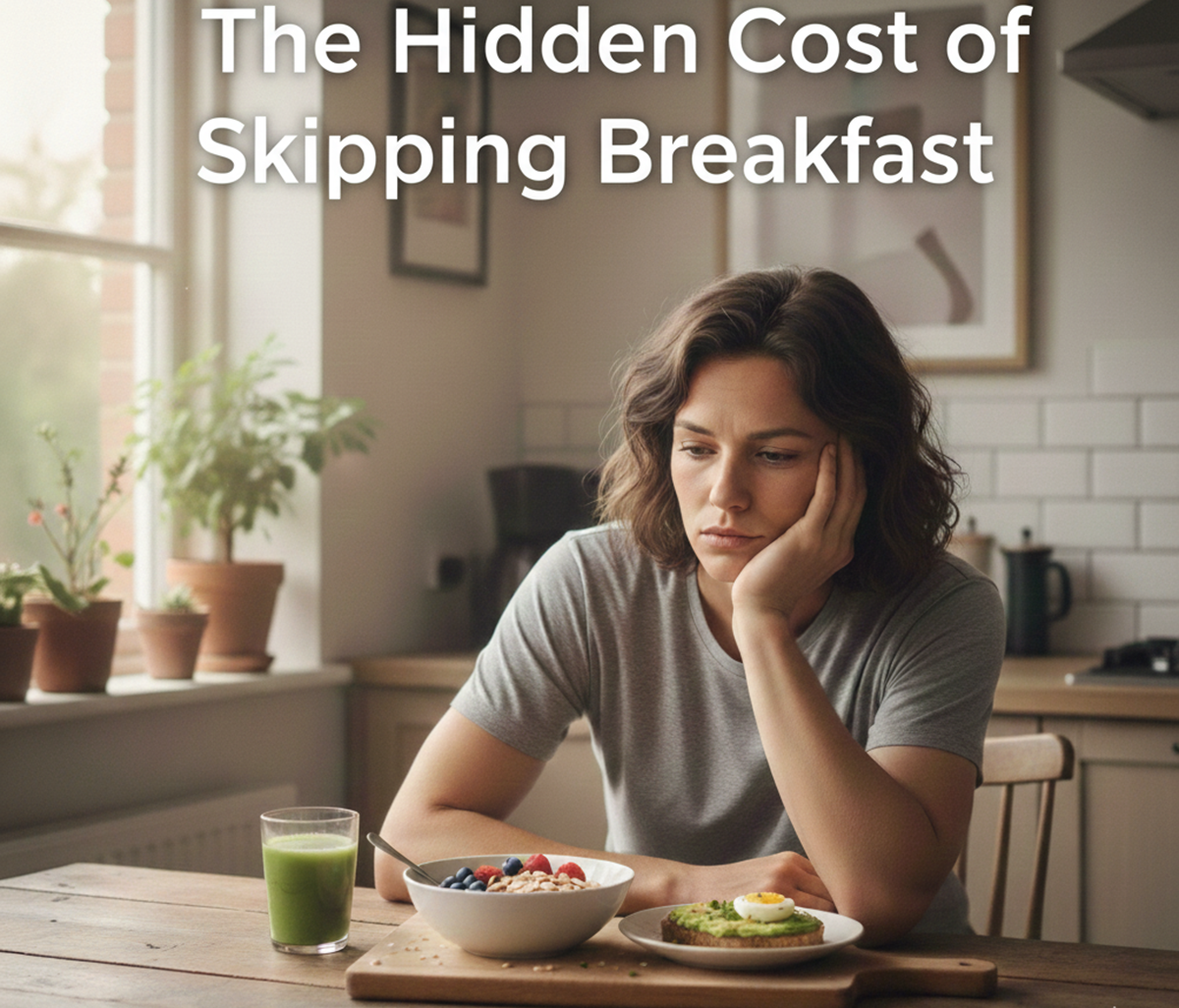
Skipping Breakfast Destroyed My Health (Until I Discovered What Doctors Won’t Tell You)
Here’s something I wish someone told me years ago: Your body doesn’t care about your busy morning schedule. It runs on ancient biology, not modern routines. When you skip breakfast, you’re not just missing a meal. You’re sending a panic signal to your survival system.

A balanced morning meal sends powerful signals to your metabolism
Look, I’ll be honest with you. For three years, I skipped breakfast. Not because I wanted to, but because mornings felt rushed. Just coffee, maybe tea. That’s it.
Then I noticed something weird. By noon, I was irritable, exhausted, and craving junk food like crazy. Meanwhile, my weight crept up slowly, even though I wasn’t eating more.
As it turns out, I was working against my own body. And science backs this up in ways that surprised even me.
What Really Happens When You Skip Breakfast
Your body doesn’t understand modern life. After 7 to 9 hours of overnight fasting, it expects fuel. No fuel means your brain quietly switches into survival mode.
Here’s the problem. When your body thinks food is scarce, it does two things:
- First, it slows down energy usage to conserve calories
- Second, it becomes more efficient at storing fat, especially around your belly
This isn’t weight loss. Instead, this is your body panicking.
Over time, skipping breakfast trains your metabolism to expect scarcity every morning. As a result, your body grabs maximum calories from lunch and dinner, even if you eat normal portions.
Research Evidence: A landmark 16-year study tracking over 26,000 men found that those who skipped breakfast daily had a 27% higher risk of heart attack compared to regular breakfast eaters. Read the full study on PubMed
The Cortisol Trap Nobody Talks About

Elevated cortisol from breakfast skipping creates a cycle of stress
Here’s where things get interesting. And a little scary.
Cortisol is your stress hormone. It naturally peaks around 7 AM to help you wake up. That’s normal. That’s healthy.
However, when you skip breakfast, cortisol stays elevated way longer than it should. Hours longer.
How Elevated Cortisol Damages Your Body
What prolonged cortisol does to your body:
- First, it messes with insulin sensitivity
- Next, it makes blood sugar unstable
- Additionally, it triggers intense cravings by afternoon
- Furthermore, it makes fat storage easier
- Finally, it breaks down muscle tissue for energy
Initially, I was skeptical. “How can one skipped meal do all that?”
Well, according to research published in ScienceDirect on chrononutrition, skipping breakfast disrupts your body’s circadian insulin signaling. Translation? Your internal clock gets confused, and your metabolism suffers.
Why You’re Losing Muscle Without Realizing It
This shocked me the most. When your body doesn’t get morning glucose, it starts breaking down muscle tissue for energy. Not fat. Muscle.
The process is called gluconeogenesis. Essentially, your body converts amino acids from muscles into glucose. It happens slowly, quietly.
You won’t notice it in a week. But over months? Years? You lose precious lean muscle mass.
The Long-Term Cost of Muscle Loss
| What Muscle Loss Leads To | Why It Matters |
|---|---|
| Lower metabolism | Muscle burns calories even at rest |
| Reduced strength | Everyday tasks become harder |
| Poor glucose control | Higher diabetes risk |
| Faster aging | Muscle loss accelerates with age |
Ironically, many people skip breakfast to stay lean. However, they’re weakening the very tissue that keeps metabolism running efficiently.
Coffee or Tea Alone? That’s Not Breakfast

Coffee alone stimulates your nervous system without providing fuel
“I used to think one cup of strong tea was enough. Who needs food, right? Wrong. By 11 AM, my stomach would hurt. I’d feel anxious and jittery. As it turns out, caffeine on an empty stomach is a terrible idea.”
What Happens When You Skip Food With Coffee
When you drink coffee or tea without food, several things happen:
- First, stomach acid increases dramatically
- Then, gut movement becomes irregular
- Over time, risk of ulcers rises
- Meanwhile, your body can’t absorb nutrients properly
Even adding something small alongside your coffee helps. For instance, a handful of nuts. A banana. A small protein shake. Anything.
Your digestive system will thank you.
The Heart Connection That Surprised Scientists
Large-scale studies consistently show that people who eat breakfast regularly have better heart health. Not slightly better. Significantly better.
Why? Because breakfast stabilizes blood sugar, reduces inflammation, and prevents extreme hunger later. All of these protect your heart.
Research-Backed Heart Health Findings
Research from the American Heart Association found that breakfast skipping is linked to:
- Higher blood pressure
- Unfavorable cholesterol patterns
- Increased arterial stress
- Greater inflammation markers
Mind blown? Mine was too.
Modern Stress Makes Breakfast Even More Critical

Pollution, noise, and stress compound the effects of skipping breakfast
We live in a world of air pollution, traffic noise, blue light screens, and constant deadlines. Unfortunately, all of these already raise cortisol and stress levels.
When you skip breakfast under these conditions, you’re piling stress on top of stress. Moreover, your body desperately needs nutrients for detoxification, hormone balance, and cellular repair.
But those nutrients never arrive.
Breakfast as Your Daily Protection
Think of breakfast as a protective shield against environmental damage. Not just a meal.
What an Actual Good Breakfast Looks Like
Here’s the good news. A proper breakfast doesn’t need to be complicated or time-consuming.
In fact, you just need three basic things:
Essential Breakfast Components
| Nutrient | Why You Need It | Simple Examples |
|---|---|---|
| Protein | Supports muscles and hormones | Eggs, yogurt, protein shake |
| Healthy Fats | Provides sustained energy | Nuts, seeds, avocado |
| Low Sugar | Prevents insulin spikes | Whole grains, berries |
Quick Breakfast Ideas (5-10 minutes):
- Milk-based smoothie with nuts or chia seeds
- Two eggs with whole wheat toast and vegetables
- Greek yogurt with berries and a handful of almonds
- Simple protein shake with banana and oats

A balanced breakfast doesn’t have to be complicated
Remember, consistency matters more than perfection. Even a small breakfast is better than none.
“But I’m Never Hungry in the Morning”
I hear you. I wasn’t either. For years.
Here’s what I learned. Lack of morning appetite usually signals one of three things:
- Perhaps you’re eating too late at night
- Or your sleep quality is poor
- Alternatively, your nighttime cortisol is elevated
How to Reset Your Morning Appetite
The Fix: Start small. Really small. A glass of milk. A banana. A handful of nuts. Your hunger hormones will adjust over two to three weeks.
Give your body time. It took me about 10 days before I actually felt hungry in the morning. Now? I wake up ready to eat.
Real Benefits You’ll Actually Notice
After I started eating breakfast consistently, things changed. Not overnight, but gradually.
“Week one was weird. I forced myself to eat. By week two, I noticed my afternoon energy was more stable. By week four, I stopped craving sugar at 3 PM. Now, three months in? I genuinely can’t imagine skipping breakfast again.”
What Regular Breakfast Eaters Experience
What regular breakfast eaters report:
- Better focus and mental clarity
- Stable energy throughout the day
- Improved mood and less irritability
- Fewer cravings for junk food
- Easier weight maintenance
These benefits build slowly. Nevertheless, they’re real.
What the Science Actually Proves
Quick Research Snapshot:
- Regular breakfast supports stable blood sugar and insulin sensitivity (PubMed Central meta-analysis)
- Furthermore, breakfast skipping is associated with higher LDL cholesterol and hypertension risk
- Morning food intake helps regulate cortisol rhythms
- Additionally, meal timing plays a role in aligning circadian biology with metabolism
These aren’t just theories. Instead, these are findings from peer-reviewed journals and major health institutions like the National Institutes of Health.
Common Questions People Ask Me
Is skipping breakfast always bad?
Not necessarily. Short-term fasting works for some people. However, long-term evidence suggests regular breakfast skipping increases heart and metabolic risks for most individuals.
Can I just drink coffee or tea instead?
Caffeine alone stimulates your stress response without providing energy. Therefore, adding even a small protein or fat source significantly reduces digestive and hormonal stress.
What if I genuinely don’t feel hungry?
Morning appetite often improves once you fix late-night eating and sleep quality. Meanwhile, starting with light options like smoothies or milk helps reset your hunger signals naturally.
Does breakfast actually help with weight loss?
Breakfast isn’t magic for weight loss. However, it supports appetite regulation, muscle preservation, and stable energy. These factors indirectly help healthy weight management.
For more on modern weight management strategies, check out our guide on 2025’s most effective weight loss trends including GLP-1, fasting, and Zone 2 cardio.
How long before I notice benefits?
Most people report better energy and reduced cravings within two to three weeks. Nevertheless, metabolic improvements take longer, usually two to three months of consistency.
My Honest Take After Changing This Habit

Small morning habits create lasting health changes
Skipping breakfast seems harmless. We’re all busy. We all have reasons.
However, when you understand the biology behind it, when you see how cortisol, insulin, and metabolism actually work, the picture becomes clear.
You’re not just missing a meal. Instead, you’re triggering ancient survival mechanisms that weren’t designed for modern life.
The Simple Truth About Breakfast
“Even a small morning meal sends a powerful message to your body: you are safe, nourished, and supported. Over time, that message makes all the difference.”
You don’t need a perfect breakfast. You don’t need an Instagram-worthy bowl of açaí and granola.
You just need something. Consistently.
Start tomorrow. Keep it simple. Give it three weeks. See how you feel.
Your body will notice. Trust me on that.
⚠️ Medical Disclaimer: This article provides general health information based on published scientific research. It is not a substitute for professional medical advice, diagnosis, or treatment. Always consult your doctor or qualified healthcare provider before making significant changes to your diet, especially if you have existing health conditions or take medications. Individual results may vary based on personal health circumstances.