
Last winter, I noticed something strange happening to my body.
My energy vanished. Getting out of bed felt like climbing a mountain. Even simple tasks exhausted me.
My doctor ran tests. The results shocked me.
My Vitamin D level was dangerously low. Just 18 ng/mL. Normal starts at 30.
“But I go outside,” I protested. “I see the sun almost every day.”
She smiled knowingly. “That’s what everyone says.”
Here’s what I learned next: Vitamin D deficiency is one of the most common nutritional problems worldwide. However, most people have no idea they’re affected.
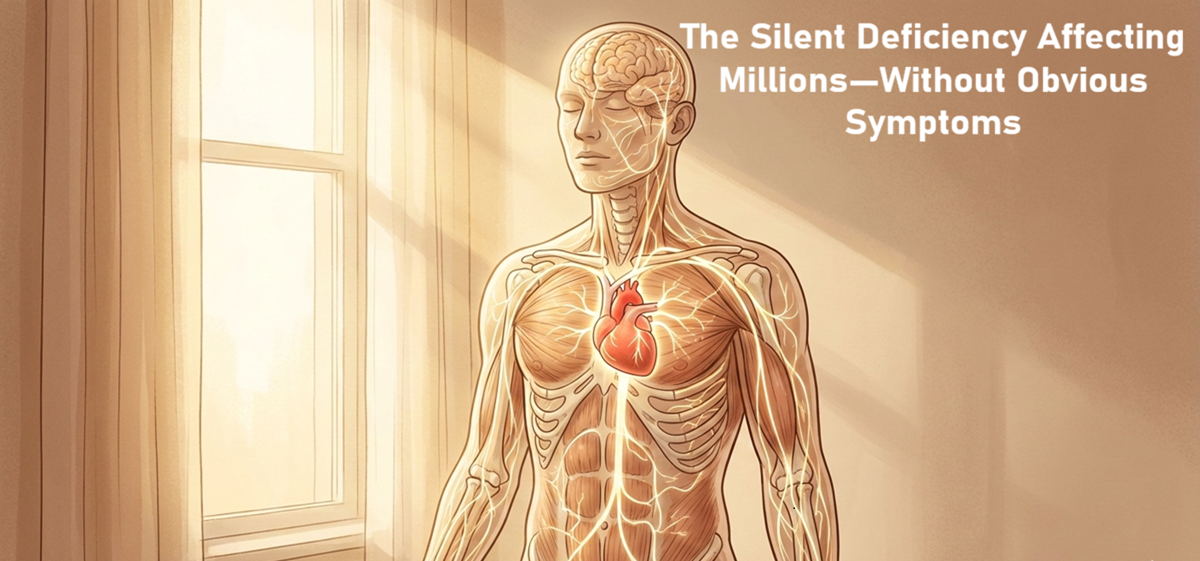
Furthermore, this isn’t just about feeling tired. Research shows that Vitamin D: The Silent Hormone influences nearly every system in your body.
Therefore, let me share what I discovered through my journey. Because honestly, what doctors told me changed everything I thought I knew about health.
Why Everyone Calls It a “Vitamin” When It’s Actually a Hormone
First things first. Vitamin D got misnamed.
Scientists discovered it in 1922. Back then, they thought it was just another vitamin. However, they were wrong.
Here’s the truth: once activated, Vitamin D behaves exactly like a hormone. In fact, it travels through your bloodstream. Then, it attaches to receptors in nearly every organ.
According to the National Institutes of Health, these receptors exist in your bones, muscles, immune cells, brain, and heart.
Think about that for a moment. In other words, your body has Vitamin D receivers everywhere. That’s not how regular vitamins work. Instead, that’s how hormones function.
Furthermore, your body makes Vitamin D from sunlight. No other vitamin works this way. For instance, you don’t manufacture Vitamin C from oranges or Vitamin B12 from meat.

What This “Silent Hormone” Actually Does (And Why You Should Care)
After my diagnosis, I started researching. Surprisingly, the findings amazed me.
Here’s what normal Vitamin D levels help your body accomplish:
- Absorb calcium efficiently from food
- Build and maintain strong bones
- Keep muscles working properly
- Control inflammation throughout your body
- Support balanced immune responses
- Help insulin function correctly
- Regulate mood and brain chemistry
Now, when Vitamin D drops too low, your body slowly loses balance. As a result, systems start failing. Consequently, disease risk climbs.
A comprehensive review published in the Journal of Pharmacology & Pharmacotherapeutics confirms these wide-ranging effects.
My doctor explained it simply: “Your body can’t function optimally without adequate Vitamin D. Period.”
The Shocking Truth About Deficiency (Even in Sunny Places)
Here’s something that blew my mind completely.
I live in a sunny region. Pakistan gets abundant sunshine year-round. Therefore, I assumed deficiency couldn’t affect me.
Wrong. Dead wrong.
The paradox is real and widespread.
Research shows that up to 68% of adults in South Asia have Vitamin D deficiency. Similar rates appear in the Middle East and parts of Africa.
Source: PubMed Central Medical Review
So Why Does This Happen?
Honestly, modern life creates perfect conditions for deficiency. In fact, let me break it down:
| Factor | How It Affects Vitamin D Production |
|---|---|
| Indoor Work | Most people work inside buildings all day. No sun exposure equals no Vitamin D production. |
| Air Pollution | Smog and pollution block UVB rays. These are the exact rays your skin needs to make Vitamin D. |
| Clothing Coverage | Cultural or religious clothing covers most skin. Less exposed skin means less Vitamin D synthesis. |
| Darker Skin Tone | Melanin acts like natural sunscreen. Darker skin needs much longer sun exposure to produce the same amount. |
| Sunscreen Use | SPF 30 blocks about 97% of UVB rays. Necessary for cancer prevention but reduces Vitamin D production. |
Additionally, many people deliberately avoid sun exposure. Skin cancer awareness campaigns have made people cautious. Rightfully so.
However, this creates a dilemma. You need sun for Vitamin D, yet too much sun causes harm.

The “Threshold” Concept That Changes Everything
Look, I’ll be honest with you. When I started supplementing, I expected miracles overnight.
However, that’s not how Vitamin D works.
Here’s the critical concept most people miss:
Vitamin D follows what scientists call a “threshold model.”
This means:
- If you’re deficient → correcting it produces significant benefits
- If you’re already sufficient → taking extra does very little
The World Health Organization acknowledges this in their clinical reviews.
This explains why some studies show amazing results while others show nothing. In other words, it depends entirely on baseline status.
My doctor compared it to filling a car’s gas tank. “If your tank is empty, adding fuel helps tremendously. On the other hand, if it’s already full, adding more doesn’t make your car run better.”
Makes sense, right?
Vitamin D and Your Immune System (No Hype, Just Facts)
During the pandemic, everyone talked about Vitamin D and immunity. Meanwhile, social media exploded with claims.
I researched this extensively. Fortunately, here’s what actual science says:
Vitamin D doesn’t “boost” immunity like some magical supplement.
Instead, it helps your immune system function normally. Specifically, it supports:
- Production of antimicrobial proteins
- Balanced inflammatory responses
- Proper immune cell activity
However, a massive analysis of 46 clinical trials found something important. In fact, people with normal Vitamin D levels don’t prevent infections better by taking extra supplements.
Source: TheNNT Medical Database
So what’s the real benefit? Correction, not excess.
When I brought my levels from 18 to 45 ng/mL, I noticed fewer colds. Additionally, my recovery time shortened. But taking more after reaching optimal levels? No additional benefits.
The Connection Between Vitamin D and Chronic Diseases
This part scared me initially. Then, it motivated me to stay consistent with supplementation.

Type 2 Diabetes Risk
Research shows that every small increase in Vitamin D levels lowers diabetes risk.
In fact, one study found that adequate levels reduced Type 2 diabetes risk by up to 43%.
Source: PLOS ONE Medical Journal
The mechanism? Vitamin D helps insulin work more effectively. Therefore, better insulin function means better blood sugar control.
Heart Disease Connection
Higher Vitamin D levels correlate with fewer heart attacks and strokes.
A comprehensive review in the International Journal of Molecular Sciences examined this relationship across multiple studies.
Again, these benefits are preventive. Vitamin D won’t cure existing heart disease. However, maintaining adequate levels helps prevent problems from developing.
Muscle Strength and Fall Prevention
My grandmother suffered a fall last year. Unfortunately, she fractured her hip. During recovery, doctors checked her Vitamin D levels.
Shockingly low. Just 12 ng/mL.
Low Vitamin D increases:
- Muscle weakness
- Poor balance
- Fall risk
- Slow injury recovery
Correction improves all these factors, especially in older adults.
Source: NIH Muscle Research Review
Interestingly, this connects to physical activity. In fact, regular exercise, like walking, jogging, running, or sprinting, combined with adequate Vitamin D levels produces the best results for muscle health and weight management.
Mental Health and Vitamin D (What Research Actually Shows)
Remember when I mentioned my winter fatigue? Turns out, low Vitamin D affected more than just my energy.
My mood tanked. Similarly, motivation disappeared. Everything felt harder than it should.
Large population studies consistently find links between low Vitamin D and depression.
One analysis of NHANES data (over 15,000 participants) showed significantly higher depression rates in people with Vitamin D deficiency.
Source: Journal of Affective Disorders
Vitamin D receptors exist throughout the brain. In fact, these receptors influence neurotransmitters that affect mood, particularly serotonin.
After bringing my levels up, my mood improved noticeably within 6 weeks. Was it placebo? Maybe partly. However, the timing matched what research predicts.
The Magnesium Connection Nobody Talks About
This discovery frustrated me initially. Honestly, why didn’t my doctor mention this upfront?

Critical fact: Vitamin D cannot activate properly without magnesium.
Your body needs magnesium to convert inactive Vitamin D into its active form.
If magnesium is low:
- Vitamin D stays inactive
- Blood tests may show “normal” levels
- Yet you still experience deficiency symptoms
This explains why some people say, “I take Vitamin D, but nothing changes.”
Often, magnesium deficiency is the hidden culprit.
I started taking magnesium alongside Vitamin D. Within two weeks, I noticed significantly better results.
Common Vitamin D Deficiency Symptoms (From Personal Experience)
My Journey With Symptoms
Before diagnosis, I experienced multiple Vitamin D deficiency symptoms. At the time, I blamed stress or age.
Here’s what I personally felt:
- Constant fatigue: Not regular tiredness. Deep, bone-crushing exhaustion that sleep didn’t fix.
- Muscle aches: Especially in my legs and lower back. Random pains with no clear cause.
- Frequent illnesses: I caught every cold going around. My immune system seemed broken.
- Mood changes: Increased irritability. Low motivation. Everything felt overwhelming.
- Poor sleep quality: Difficulty falling asleep despite being exhausted.
- Hair thinning: More hair fell out than usual. This one worried me most.
Many of these Vitamin D deficiency symptoms are vague. In fact, they overlap with countless other conditions. That’s why deficiency often goes undiagnosed for years.
Getting tested is the only way to know for sure.
Vitamin D3 vs Vitamin D2: The Difference That Actually Matters
Understanding the Two Types
When buying supplements, you’ll see two types. Initially, I thought they were the same. However, they’re not.
| Vitamin D3 (Cholecalciferol) | Vitamin D2 (Ergocalciferol) |
|---|---|
| Comes from sunlight and animal sources | Comes from UV-exposed mushrooms and fortified foods |
| Raises blood levels more effectively | Less effective at raising blood levels |
| Stays active in body longer | Breaks down faster |
| Better absorbed and utilized | Lower absorption rates |
| Recommended by most doctors | Useful for vegans but less optimal |
Clinical trials consistently show D3 superiority. In fact, one study found D3 raised blood levels 87% more effectively than D2.
Source: American Journal of Clinical Nutrition
My doctor prescribed D3 specifically. After seeing the research, I understand why.
Best Vitamin D Sources (Food, Supplements, and Sun)
The Food Challenge
Getting adequate Vitamin D from Vitamin D sources alone is genuinely difficult. In other words, let me be honest about this.

Food Sources (Limited But Helpful)
Best natural Vitamin D foods:
- Wild-caught fatty fish: Salmon, mackerel, sardines (600-1000 IU per 3-ounce serving)
- Cod liver oil: Extremely high content (1360 IU per tablespoon) but strong taste
- Egg yolks: About 40 IU per egg (helpful but not sufficient alone)
- Fortified foods: Milk, orange juice, cereals (varies, usually 100-150 IU per serving)
Source: NIH Food Composition Database
Plant-Based Option: UV-Exposed Mushrooms
Here’s something fascinating. In fact, mushrooms exposed to UV light produce Vitamin D2.
Some brands now sell UV-treated mushrooms containing 400-800 IU per serving.
Cooking tip from experience:
Fry or bake mushrooms. Don’t boil them. Boiling leaches Vitamin D into the water.
Source: Harvard Nutrition Source
Vitamin D Tablets, Injections, and Supplements
For most people with deficiency, food alone won’t cut it. Therefore, Vitamin D foods, tablets and injections all play different roles.
| Supplement Type | Best For | My Experience |
|---|---|---|
| Daily tablets (1000-4000 IU) | Maintenance and mild deficiency | Most convenient. I take 2000 IU daily with breakfast. |
| Weekly high-dose (50,000 IU) | Severe deficiency correction | My doctor prescribed this initially for 8 weeks. Very effective. |
| Injections | Severe deficiency or absorption problems | Never needed these personally. Reserved for special cases. |
| Liquid drops | Flexible dosing, good for children | Easy to adjust dose. Good option if you dislike pills. |
Sunlight: The Natural Source
Here’s the complicated part. Sun exposure produces Vitamin D efficiently. However, it also increases skin cancer risk.
General guidelines:
- 10-30 minutes of midday sun exposure
- Without sunscreen
- On arms and legs
- Several times per week
However, this varies tremendously based on skin tone, location, season, and time of day.
Darker skin needs significantly more exposure. For instance, someone with very dark skin might need 3-6 times longer than someone with fair skin.
Personally, I aim for morning sun when possible. Then I supplement to ensure adequate intake year-round.
Absorption Matters More Than Dose (An Overlooked Factor)
The Fat-Soluble Factor
Vitamin D is fat-soluble. In fact, this single fact changes everything about how you should take it.
What fat-soluble means:
- Your body needs dietary fat to absorb Vitamin D properly
- Taking it on an empty stomach wastes much of the dose
- Taking it with meals increases absorption significantly
Studies show absorption varies wildly between individuals. For instance, some people absorb 50% of their supplement. Others absorb barely 20%.
Source: Journal of Bone and Mineral Research
I learned this the hard way. For three months, I took my supplement first thing in the morning with just water. Unfortunately, my levels barely budged.
Then I switched to taking it with breakfast (which includes eggs and avocado). Two months later, my levels jumped dramatically.
Small change. Huge difference.

How Much Vitamin D Is Actually Safe?
Understanding Safe Limits
This question worried me initially. Can you take too much? Absolutely. However, it’s harder than you might think.
According to NIH and Mayo Clinic:
- Safe upper limit for adults: 4,000 IU per day
- Toxicity is extremely rare
- Sun exposure cannot cause toxicity (your body self-regulates)
- Toxicity only occurs with very high doses over many months
Source: Mayo Clinic Medical Information
Most toxicity cases involve people taking 50,000+ IU daily for extended periods. In other words, that’s 12 times the upper limit.
My maintenance dose is 2,000 IU daily. Well within safe ranges. Yet enough to keep my levels optimal.
Testing: The Only Way to Know Your True Status
The Blood Test You Need
You can’t feel your Vitamin D level. Unfortunately, symptoms are too vague.
Testing is simple. In fact, a blood test called 25-hydroxy Vitamin D measures your status.
Understanding Your Results:
| Level (ng/mL) | Status | Action Needed |
|---|---|---|
| Below 20 | Deficient | Immediate supplementation required |
| 20-29 | Insufficient | Supplementation recommended |
| 30-50 | Sufficient | Maintain with diet, sun, or low-dose supplements |
| 50-100 | Optimal (for some conditions) | Generally safe but monitor |
| Above 100 | Potentially toxic | Stop supplementation, consult doctor |
I test every 6 months now. Costs about $30-50 where I live. Worth every penny for peace of mind.
Practical Action Plan (What Actually Works)
After one year of fixing my deficiency, here’s my honest advice based on real experience:

Step 1: Get Tested
Don’t guess. Request a 25-hydroxy Vitamin D test from your doctor.
Many insurance plans cover this. If not, the out-of-pocket cost is reasonable.
Step 2: Choose Quality D3 Supplements
Look for:
- Vitamin D3 (cholecalciferol), not D2
- Reputable brands with third-party testing
- Appropriate dose based on your test results
Step 3: Take With Food
Always consume Vitamin D supplements with a meal containing fat.
Breakfast with eggs, lunch with olive oil, dinner with nuts. Any of these work perfectly.
Step 4: Add Magnesium
Consider a magnesium supplement (200-400mg daily).
Or increase Vitamin D sources like nuts, seeds, and leafy greens.
Step 5: Get Some Sun (Safely)
Aim for 10-20 minutes of sun exposure several times weekly.
Early morning or late afternoon is safest. Avoid peak midday sun for extended periods.
Step 6: Retest in 3-6 Months
Check your levels again to ensure your approach is working.
Adjust dosage based on results and how you feel.
What I Noticed After Fixing My Deficiency
Let me share the honest timeline. Because results don’t happen overnight.
Week 1-2: Nothing noticeable. I wondered if supplements were even working.
Week 3-4: Sleep improved slightly. Falling asleep became easier.
Week 6-8: Energy levels increased noticeably. That crushing fatigue lifted.
Month 3: Muscle aches disappeared. Mood stabilized. Fewer colds.
Month 6: Blood test showed levels at 45 ng/mL. All symptoms resolved.
Was I skeptical at first? Absolutely. Days 1-5 kind of sucked because nothing changed.
But patience paid off. My body needed time to rebuild stores and restore function.
Common Mistakes People Make (That I Made Too)
Look, I’ll admit my mistakes. Maybe you’ll avoid them.
Mistake 1: Taking Inconsistently
I’d take supplements for a week, forget for three days, restart randomly.
Consistency matters. Daily supplementation works best for most people.
Mistake 2: Taking on Empty Stomach
Wasted three months doing this. Fat-soluble vitamins need fat to absorb.
Simple change. Massive improvement.
Mistake 3: Expecting Instant Results
I wanted miracles in week one. Reality? Benefits appear gradually over 6-12 weeks.
Patience is essential.
Mistake 4: Ignoring Magnesium
Didn’t know about this connection initially. Adding magnesium accelerated my results significantly.
Mistake 5: Never Retesting
Took supplements blindly for months without checking if they worked.
Testing confirms your approach is effective. Don’t skip this step.

Frequently Asked Questions (From Real Conversations)
Can I get enough Vitamin D from food alone?
Honestly? Extremely difficult. You’d need to eat fatty fish daily plus multiple eggs plus fortified foods.
Most people need supplementation or significant sun exposure.
How long does it take to correct deficiency?
Depends on severity. Mild deficiency: 6-8 weeks. Severe deficiency: 3-6 months.
My levels rose from 18 to 45 ng/mL in about 4 months with daily supplementation.
Should I take Vitamin D in summer?
Yes, unless you’re getting significant sun exposure AND have tested your levels.
Remember the paradox. Even sunny regions have high deficiency rates due to indoor lifestyles.
What time of day is best to take Vitamin D?
Morning with breakfast works well for most people. But any meal with fat is fine.
Consistency matters more than timing.
Can Vitamin D help with weight loss?
Indirectly, yes. Adequate levels improve energy, muscle function, and metabolism.
Combined with proper exercise like walking, jogging, running, or sprinting, results improve.
Why This Matters More Than Most People Realize
Vitamin D isn’t trendy. It’s not marketed like the latest superfood.
But here’s the truth: this nutrient affects fundamental biological processes.
Modern life has created widespread deficiency. Indoor work. Pollution. Clothing. Sunscreen. All necessary aspects of contemporary living.
Yet they’ve disconnected us from our primary Vitamin D source.
Fixing that gap is:
- Simple: A daily supplement costs pennies
- Affordable: Even quality brands are inexpensive
- Supported by strong science: Thousands of studies confirm benefits
Vitamin D protects your health foundation. And foundations matter tremendously.
One year ago, I was exhausted, achy, and constantly sick. Today, I feel better than I have in years.
Was it only Vitamin D? Maybe not entirely. But correction was the catalyst that started everything else working properly again.
Final Thoughts: What I’d Tell My Past Self
If I could go back one year, here’s what I’d say:
“Get tested now. Don’t wait for symptoms to become unbearable.”
“Take D3, not D2. With food. Every single day.”
“Add magnesium. It matters more than you think.”
“Be patient. Results take 6-12 weeks minimum.”
“Retest in 3 months. Adjust based on results.”
“This isn’t magic. It’s basic biology that modern life disrupted.”
Vitamin D deficiency is common, preventable, and correctable. The science is clear. The solutions are simple.
Your body deserves adequate Vitamin D. Give it what it needs.

⚠️ Medical Disclaimer
This article provides general health information based on scientific research and personal experience. It is not intended as a substitute for professional medical advice, diagnosis, or treatment.
Always seek the advice of your physician or qualified health provider with questions regarding medical conditions, Vitamin D deficiency symptoms, appropriate Vitamin D sources, or decisions about Vitamin D foods, tablets and injections.
Never disregard professional medical advice or delay seeking it because of information you read here. Individual responses to supplementation vary significantly. What worked for me may not work identically for you.
If you think you may have a medical emergency, call your doctor or emergency services immediately.
Medical References Used:
- National Institutes of Health (NIH) – Vitamin D Fact Sheets
- World Health Organization (WHO) – Clinical Reviews
- PubMed Central – Peer-Reviewed Medical Studies
- Mayo Clinic – Patient Care Information
- Harvard T.H. Chan School of Public Health – Nutrition Source
- Journal of Clinical Immunology – Research Articles
- Journal of Pharmacology & Pharmacotherapeutics – Medical Reviews
- American Journal of Clinical Nutrition – Clinical Trials

About Shahbaz Ahmed 🌿
Shahbaz Ahmed is a passionate health guide, nutrition advisor, and wellness advocate dedicated to helping people achieve sustainable weight loss and balanced living. After personally shedding 30 lbs in just three months through mindful eating and consistent movement, he transformed not only his own health but also inspired and guided many others to do the same. Today, he shares research-backed insights on nutrition, fitness, and lifestyle transformation — empowering readers to make smarter food choices and live with lasting vitality.
Learn more about his journey and expert guidance on his About page.